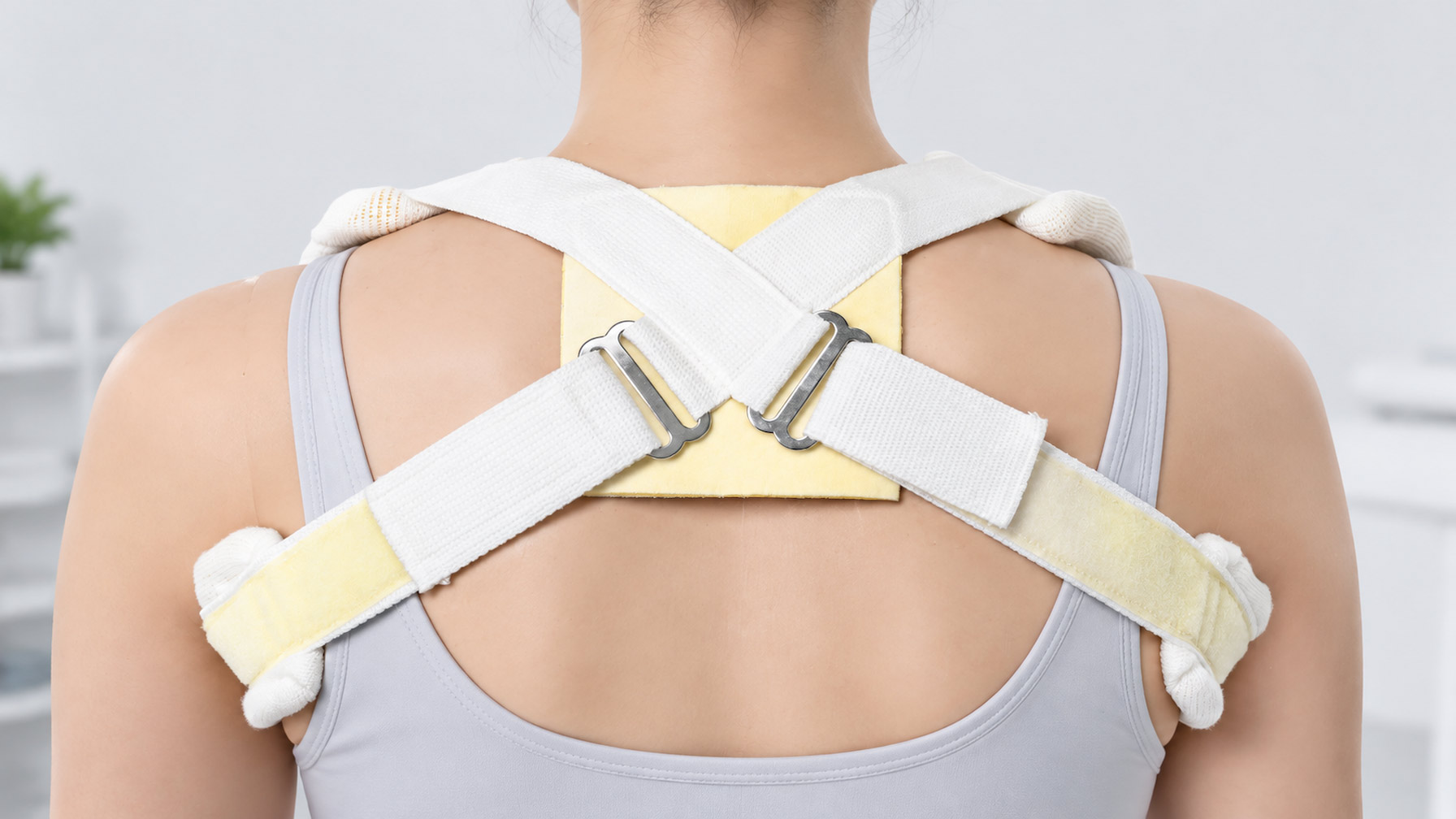
Figure of Eight Bandage for Clavicle Fractures: Application and Mechanics
Clavicle fractures account for approximately 5% to 10% of all adult fractures and nearly 44% of all shoulder girdle injuries, with the vast majority occurring in the middle third (midshaft) of the collarbone. In conservative orthopedic rehabilitation and non-operative trauma management, the figure of eight bandage (also referred to as a figure-8 brace or clavicle harness) remains one of the most widely utilized external orthoses.
For orthopedic surgeons, physical therapists, rehabilitation specialists, and medical device distributors, understanding the biomechanical mechanics, proper application protocols, and structural engineering of the figure of eight bandage clavicle support is essential. This clinical and technical guide examines how posterior shoulder retraction immobilizes clavicle fractures, compares the figure-8 design against traditional arm slings, and outlines critical sourcing criteria for healthcare buyers.
What Is a Figure of Eight Bandage?
A figure of eight bandage is a specialized orthopedic immobilization orthosis featuring two padded shoulder loops that cross posteriorly between the scapulae, secured with a central anchor plate and adjustable tension straps. The resulting geometric configuration resembles the numeral "8", encircling both acromioclavicular arches.
Unlike circumferential limb casts, a figure of 8 bandage clavicle fracture support does not apply direct compressive force to the fracture site itself. Instead, it exerts dynamic, indirect biomechanical traction across the shoulder girdle, holding the clavicle in anatomical alignment while allowing patients to maintain functional mobility of both hands and elbows during the multi-week healing phase.
Biomechanical Mechanics of Clavicle Immobilization
To appreciate the therapeutic value of the figure of eight bandage, one must analyze the deforming forces acting on a fractured clavicle:
· 1. Medial Fragment Elevation: The sternocleidomastoid muscle pulls the medial (proximal) clavicle fragment superiorly and posteriorly.
· 2. Lateral Fragment Depression & Shortening: The combined weight of the upper extremity, assisted by the pectoralis major and latissimus dorsi, pulls the lateral (distal) clavicle fragment downward, forward, and medially, leading to typical fracture overlap and shortening.
The figure of 8 bandage actively counteracts these pathological forces through three interconnected biomechanical principles:
Bilateral Shoulder Retraction and Elevation
By anchoring around the anterior aspects of both shoulders and anchoring tightly across the interscapular thoracic spine, the figure-8 brace pulls both shoulders backward (retraction) and upward (elevation). This retraction widens the anterior chest wall, restoring physiological tension along the subclavius muscle and soft tissue envelope, thereby pulling the shortened lateral fragment back into axial alignment.
Three-Point Dynamic Force Distribution
The central back plate acts as a posterior biomechanical fulcrum, while the bilateral padded straps act as anterior tension levers. This three-point stabilization distributes mechanical loads uniformly across the thoracic spine and scapulae, preventing localized pressure points over the delicate brachial plexus and axillary vessels.
Preventing Malunion and Preserving Collarbone Length
Maintaining clavicular length is paramount in orthopedic outcomes. Excessive shortening (>15-20 mm) can lead to scapular dyskinesis, chronic shoulder impingement, and diminished rotator cuff strength. The continuous posterior traction delivered by an engineered figure of eight bandage minimizes shortening displacement, facilitating optimal fibrocartilage callus formation.
Clinical Application & Step-by-Step Fitting Protocol
Correct brace placement and symmetrical tensioning directly dictate clinical success and patient compliance. Rehabilitation specialists and nursing staff should follow a structured fitting protocol:
· Step 1: Patient Posture Alignment — Position the patient in an upright seated or standing posture. Instruct the patient to perform gentle active shoulder retraction ("pinching the shoulder blades together") to open the chest cavity prior to strap tensioning.
· Step 2: Central Back Placement — Align the padded junction plate symmetrically between the medial borders of the scapulae over the T2–T6 thoracic vertebrae.
· Step 3: Bilateral Strap Routing — Pass the padded shoulder straps over the tops of both shoulders, route them under each axilla (armpit), and feed the strap ends through the central heavy-duty D-rings or buckle loops.
· Step 4: Symmetrical Tensioning — Gently and symmetrically tighten both pull-straps until firm posterior retraction is achieved without compromising peripheral blood flow.
· Step 5: Neurovascular Assessment — Immediately palpate the radial pulse on both wrists and perform a capillary refill test on the fingernails. Ask the patient to report any tingling, numbness, or burning sensations along the arms. Loosen the straps if axillary neurovascular impingement is suspected.
· Step 6: Patient Education & Re-Tightening — Educate the patient on daily wear protocols. Because straps naturally experience micro-slack over 24-48 hours of movement, periodic re-tensioning under clinical guidance is recommended.
Figure of Eight Bandage vs. Arm Sling: A Clinical Comparison
Both figure-8 braces and simple arm slings are standard non-operative modalities for midshaft clavicle fractures. Healthcare providers and distributors evaluate their distinct characteristics:
· Figure of Eight Bandage: Advantages: Frees both hands and elbows, allowing bilateral computer typing, eating, and personal hygiene; provides active bilateral postural retraction that directly opposes fragment overlap. Considerations: Requires meticulous padding to prevent axillary skin irritation; necessitates assistance during initial application.
· Simple Arm Sling: Advantages: Very easy for patients to put on independently; provides immediate pain relief by completely resting the weight of the injured arm. Considerations: Completely immobilizes the elbow and shoulder, potentially leading to adhesive capsulitis (frozen shoulder) and joint stiffness after several weeks; does not actively pull the shoulders into posterior retraction.
In modern clinical pathways, many orthopedic teams utilize a hybrid protocol: employing a figure-8 brace for continuous anatomical stabilization while adding a light sling during the acute initial 7–10 days for gravitational arm support.
Key Engineering & Material Features for Sourcing High-Grade Figure-8 Braces
For medical distributors, DME providers, and orthopedic brand owners, selecting a dependable manufacturing partner requires analyzing product construction beyond basic aesthetics:
1. Thickened, Anatomically Padded Shoulder Straps
The primary reason for patient non-compliance is axillary discomfort. Premium figure-8 braces incorporate high-density open-cell foam or resilient EVA padding encased in soft brushed tricot or plush velvet. The padding must extend generously past the axillary fold to cushion delicate superficial nerves.
2. Breathable Perforated Composite Textiles
Continuous 24-hour wear demands exceptional thermal and moisture management. Utilizing perforated neoprene laminates or 3D air mesh facilitates active ventilation, preventing sweat accumulation, skin maceration, and contact dermatitis.
3. Reinforced Central Junction Plate & High-Tensile D-Rings
Under sustained bilateral tension, inferior plastic buckles can deform or snap. Medical-grade braces utilize heavy-duty POM (polyoxymethylene) or high-grade steel D-rings anchored with reinforced box-x stitching across a multi-layer posterior spine pad.
4. Medical-Grade Micro-Hook Fasteners
Fastener slippage compromises fracture immobilization. High-shear micro-hook velcro ensures rock-solid locking tension, rated for over 5,000+ peeling cycles without shedding fibers or degrading grip strength.
Partner with Xiamen Huakang Orthopedic for OEM/ODM Clavicle Braces
Xiamen Huakang Orthopedic Co., Ltd. is a specialized Chinese manufacturer of medical-grade orthopedic braces, rehabilitation supports, and orthopedic soft goods. With over a decade of dedicated production expertise, our factory produces industry-leading clavicle immobilization braces (including our acclaimed CB002 Clavicle & Posture Support series) for hospital distributors and retail medical brands worldwide.
· • Certified Quality Management: Fully registered and compliant with FDA, CE/MDR, and ISO 13485 medical device manufacturing standards.
· • Custom OEM & ODM Capabilities: Full private-label customization including woven labels, heat-transfer silicone branding, bespoke strap dimensions, and custom retail packaging.
· • Rigorous In-House Testing: Every batch undergoes seam tensile pull-testing, buckle fatigue analysis, and skin-contact bio-compatibility inspections.
· • Flexible B2B Sourcing Terms: Low MOQ for trial orders and scalable container-level manufacturing capacity.
Looking for a Reliable Clavicle Brace Manufacturer?
Whether you are expanding your orthopedic rehabilitation catalog or seeking a dependable OEM partner for figure-8 clavicle braces, Xiamen Huakang Orthopedic is ready to support your business growth.
Contact our sales-engineering team today to request product samples, technical spec sheets, and competitive direct-factory quotation tiers.
Explore our Clavicle Support & Posture Corrector Series for detailed product specifications.
Disclaimer: This article is intended for B2B educational and product sourcing reference only. Clinical treatment and brace selection for clavicle fractures must always be guided by a qualified orthopedic surgeon or licensed healthcare professional.


